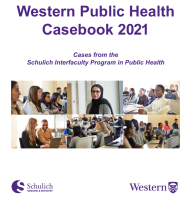
Western Public Health Casebook 2021: Cases from the Schulich Interfaculty Program in Public Health
Sinopse
The Master of Public Health Program (MPH) at Western University is a 12-month full-time program that incorporates a 12-week practicum. The MPH Program curriculum includes innovations such as case-method learning, Brown Bag seminars, Integrative Workshops, field trips and career counselling. The Brown Bag seminars allow the students to hear from and interact and network with practitioners from the field. The faculty of the MPH Program are drawn from various Faculties across campus, and represent a broad range of disciplines pertinent to public health.
Western’s MPH Program relies extensively on the case-based/experiential method of learning. The Program aims to deliver 60% of pedagogic material using the case-based approach – a unique feature not found to a similar extent in other MPH Programs worldwide. The case method of learning is not about the traditional lecture-style classroom setting, but is about the
student being an active part of the learning experience, which means learning by doing. It introduces complex and often ambiguous real-world scenarios into the classroom, forcing students to think and make decisions, often with incomplete and inaccurate data.
Capítulos
-
Preface
-
Acknowledgements
-
IntroductionCase teaching when case counts are rising: Teaching online using cases during a global pandemic
-
CASE 1Artificial Intelligence in Primary Care: Implementing New Technology into Existing Systems
-
CASE 2The Silent Epidemic of Gender Inequality in Rwandan Refugee Camps
-
CASE 3Melcom and the COVID-19 Pandemic: Working Toward a Resilient Food Business Industry
-
CASE 4Journeying Together—Unlearning is the New Learning
-
CASE 5A Stakeholder Analysis: Developing an Indigenous-Specific Intercultural Competency Training Module (Part A)
-
CASE 6A Rapid Risk Assessment Tool: Determining the Risk of New/Emerging/Re-Emerging Infectious Diseases in Canada
-
CASE 7Implementation Research: A Strategy for Developing Indigenous-Specific Intercultural Competency Training Programs (Part B)
-
CASE 8Case Attribution for COVID-19: Who Counts What?
-
CASE 9Gun Violence: A Public Health Issue?
-
CASE 10Lost in Translation: Developing Strategies for Indigenous People who have Cancer, Limited English Proficiency, and Limited Health Literacy
-
CASE 11Evaluating a Public Health Program for Continuous Quality Improvement: Options and Methods in a Time of Pandemic
-
CASE 12Eyes on the Supplies: Improving Canada’s National Emergency Stockpile System (NESS)
-
CASE 13From Bench to Classroom: Knowledge Translation in School Mental Health Initiatives
-
CASE 14Hiring a Competent Health Promoter: Can Competency Statements Help?
-
CASE 15When the Midnight Train is the First of Many: Dealing with Irregular and Unsafe Railway Crossings in the City of London
Downloads
- Casebook Title Page & Front Matter.pdf Casebook Title Page & Front Matter.pdf
- Complete 2021 Casebook.pdf Complete 2021 Casebook.pdf
- Table of Contents.pdf Table of Contents.pdf
Publicado
Licença

Este trabalho encontra-se publicado com a Licença Internacional Creative Commons Atribuição 4.0.